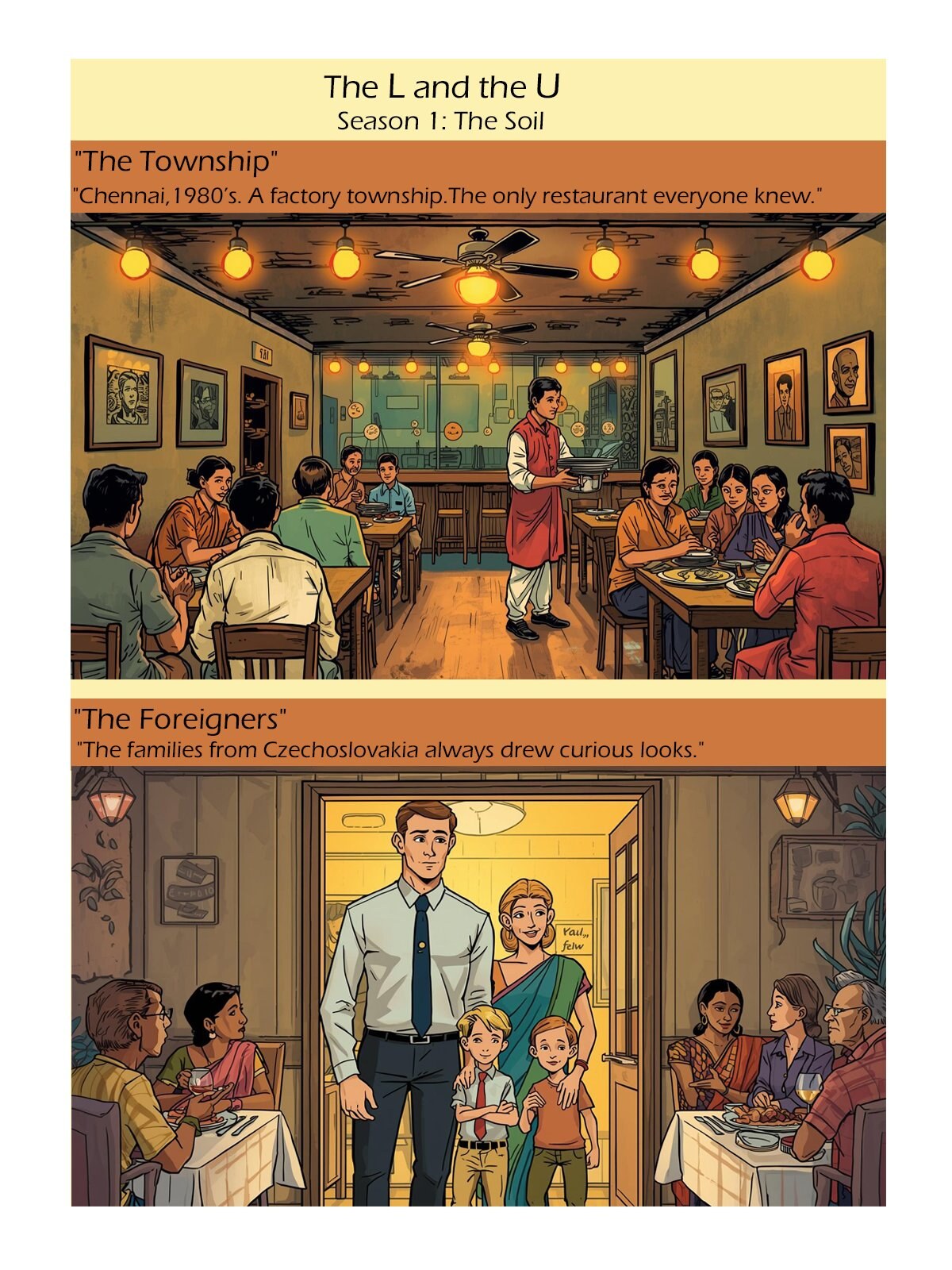
Seven-year-old Arjun and his four-year-old sister Meera lived in a bustling township in Chennai where their Appa worked at a big factory. Engineers from faraway countries — places where snow fell and people spoke in sounds Arjun couldn't understand — also lived there with their families.
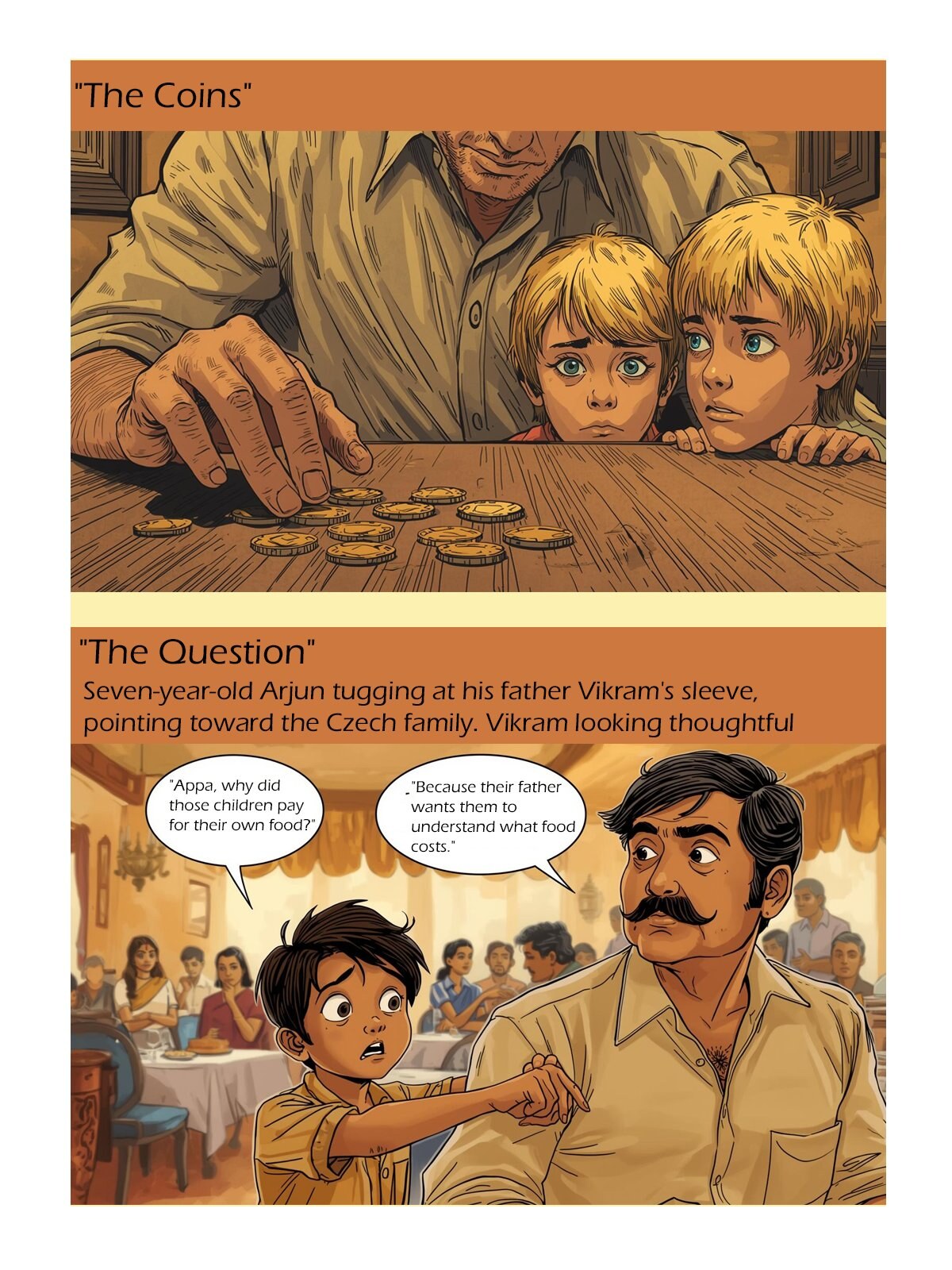
One Sunday, Arjun saw something strange at the township restaurant. A tall engineer from a country called Czechoslovakia sat down with his two children. But instead of ordering for them, the man placed a few coins in front of each child and said something in his language. The children studied the menu carefully, counted their coins, whispered to each other, and then — to Arjun's amazement — ordered their own food and paid for it themselves.
His father, Vikram, watched thoughtfully. "Because, Arjun, their father wants them to understand what food costs."
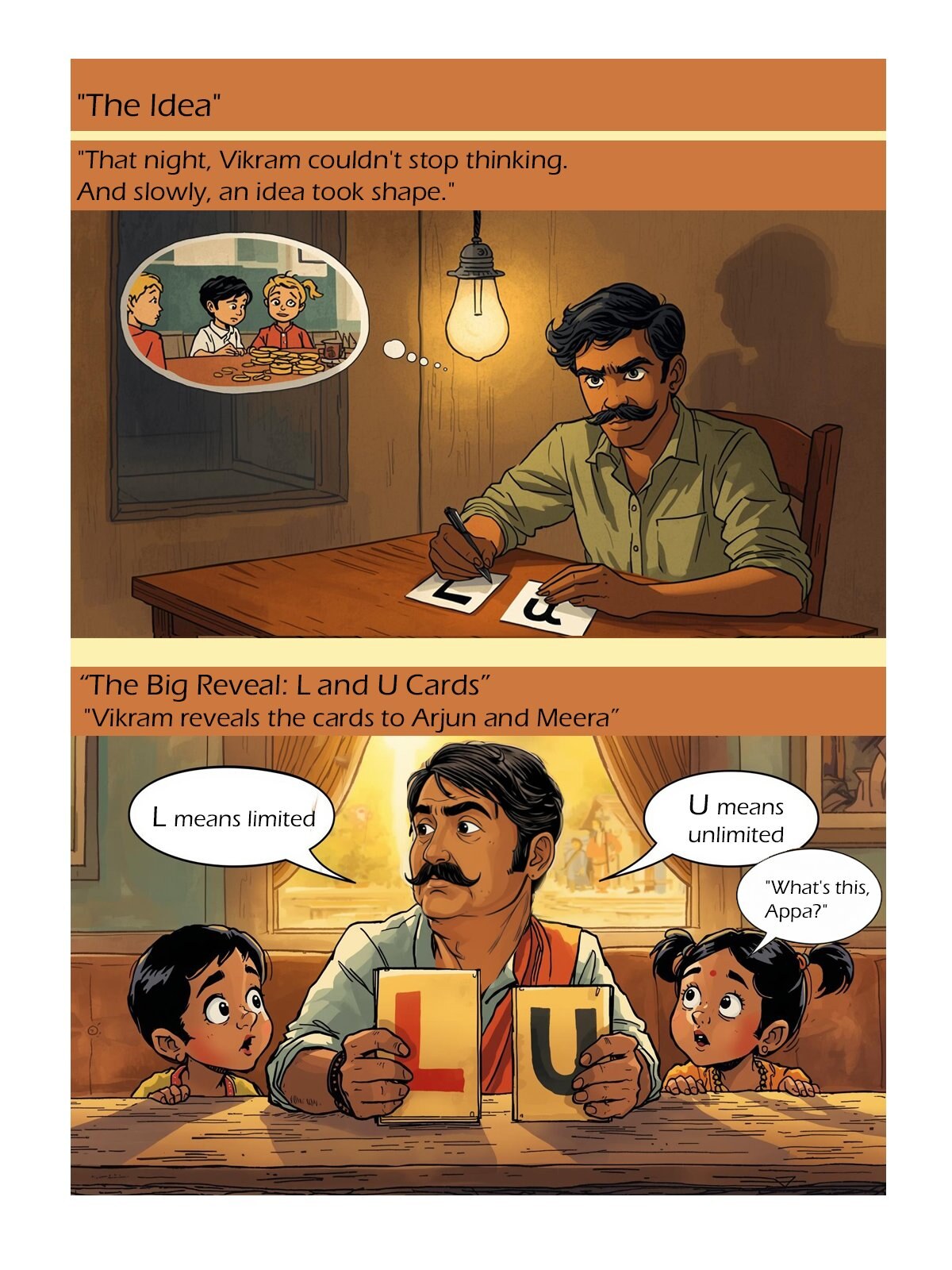
That evening, Vikram couldn't stop thinking about what he'd seen. And slowly, an idea took shape. The next weekend, when the family went to their favourite restaurant in Anna Nagar, Vikram handed Arjun and Meera each a small card he'd made at home. One side had a big L. The other side had a big U.
"L means Limited," Vikram said. "U means Unlimited. Before we order, I'll show you a sign. If it's U, you can order whatever you like. If it's L — I only have a fixed amount in my wallet today, and we all choose carefully."
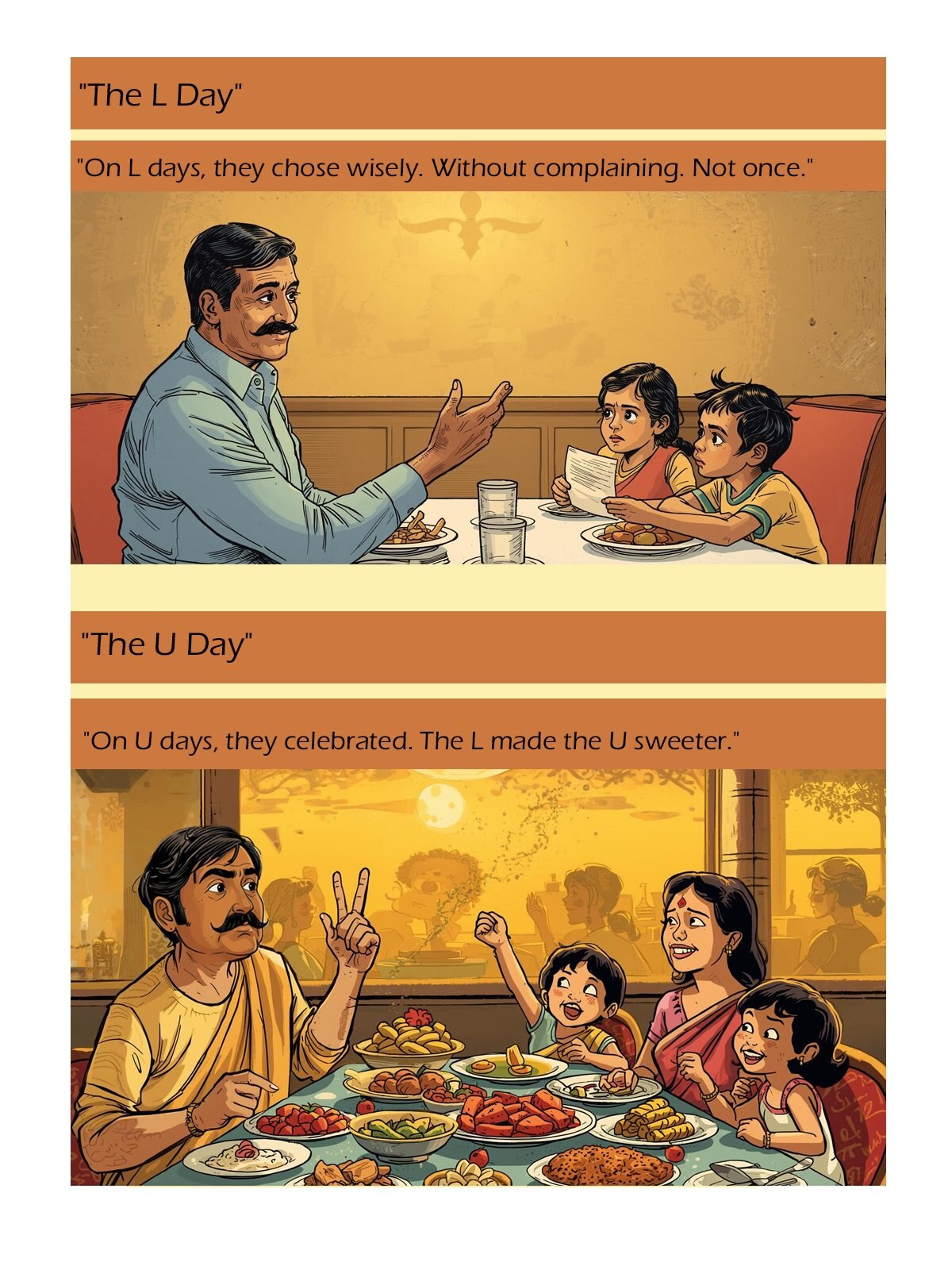
From that day, at every restaurant visit, two small pairs of eyes would look to Appa first. He'd hold up his fingers — L or U — and the children would nod, understanding completely. On U days, they celebrated. On L days, they chose wisely, without complaining. Not once.
The L didn't mean less love. It meant Appa trusted them enough to tell them the truth.
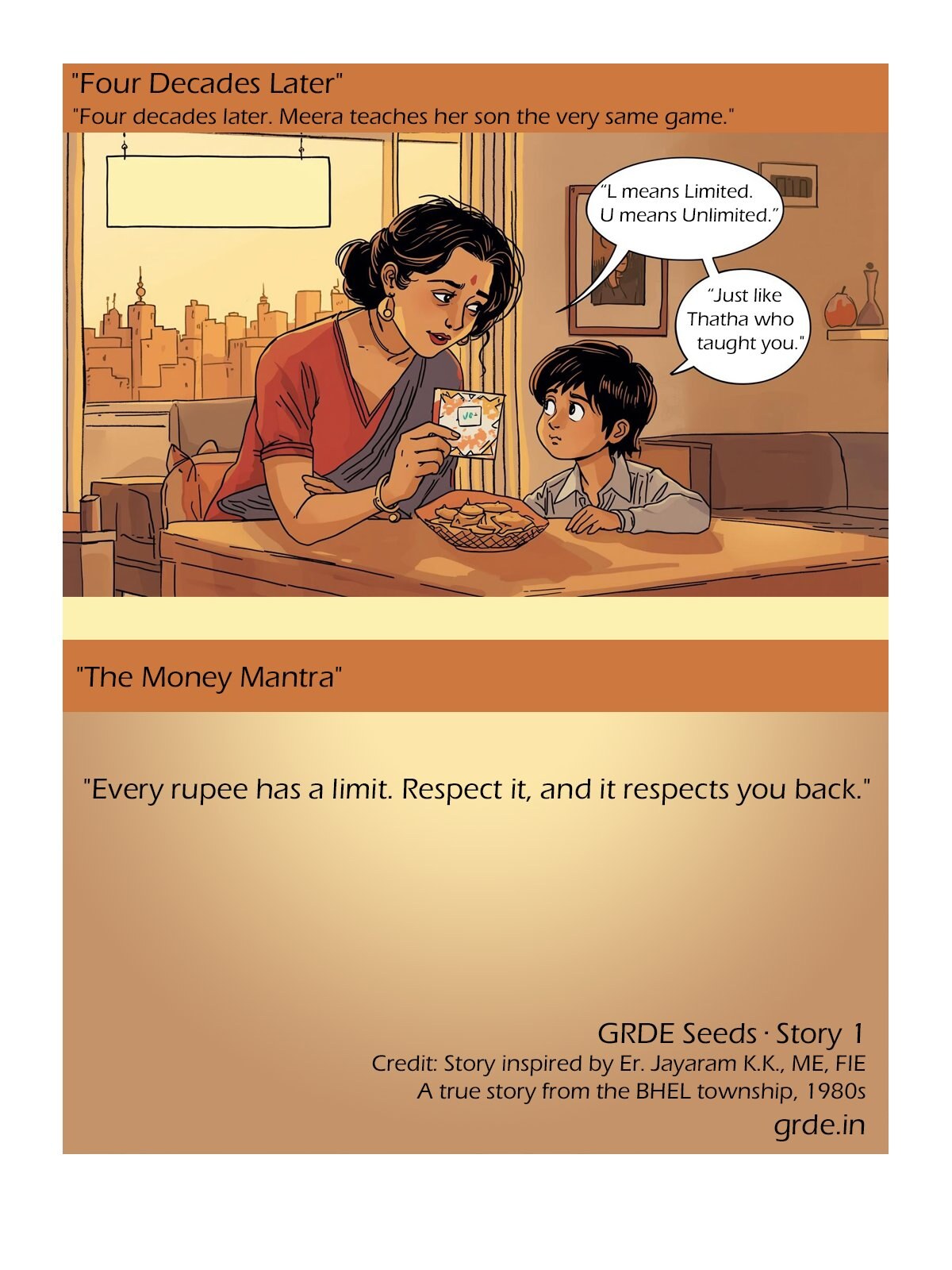
Four decades later, Arjun's sister Meera gave her own son his first pocket money — and taught him the very same game.